The security of applications is going through one of the most transformative moments in its history. With the acceleration of artificial intelligence, the massive use of open source, and the adoption of distributed architectures, the volume and complexity of software have grown at a pace that traditional AppSec models can no longer keep up with. In this scenario, organizations produce more code than ever, much of it generated, adapted, or influenced by AI systems, which significantly expands the attack surface and reduces clarity about the real risk assumed.
Traditional AppSec was built for a different context, based on isolated static analyses, manual triage, and prioritization based solely on technical severity. This model worked when delivery cycles were longer, the volume of code was predictable, and the attack surface was relatively stable. Today, however, this scenario no longer exists. Security teams face thousands of disconnected alerts, multiple tools generating conflicting priorities, backlogs growing faster than the capacity to fix them, and constant friction between security and development.
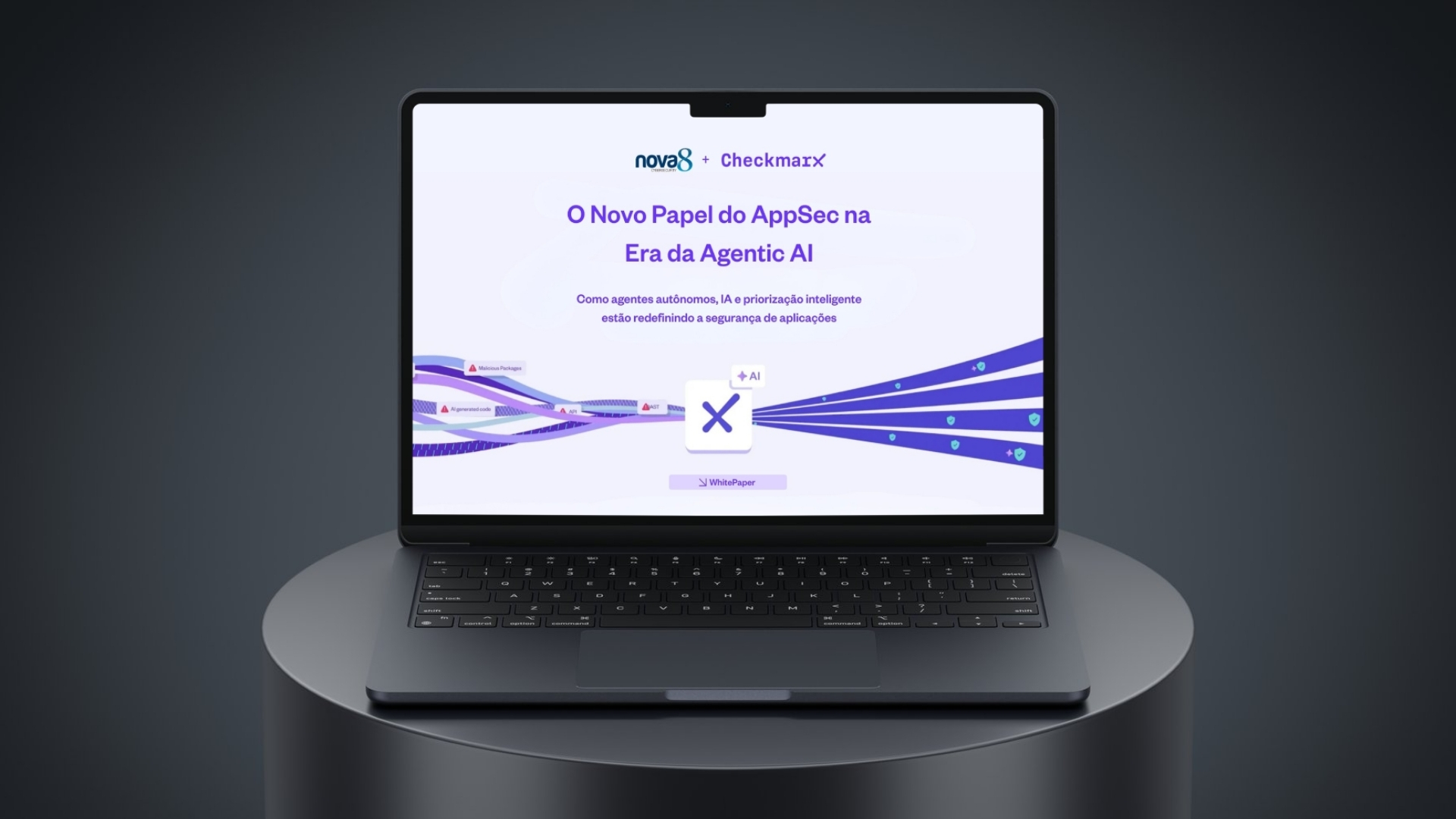
It is at this point that the need arises to rethink the role of AppSec. The evolution to an Agentic AI-driven AppSec represents a structural change, not just a technological one. Unlike AI models that only analyze data, Agentic AI acts through agents capable of observing the environment, correlating signals, making decisions, and acting continuously throughout the software lifecycle. In practice, this means moving from excessive volume and noise to a context-based, intelligent prioritization, and real risk approach.
An agent-driven AppSec allows for the correlation of information from code, open source dependencies, runtime behavior, exploitation history, and business context. Instead of just answering the question “what is the severity of this vulnerability,” the focus shifts to “is this vulnerability exploitable,” “is it exposed in production,” “which asset does it impact,” and “what is the real risk to the business.” This shift transforms AppSec from a reactive function into a true decision support system.
In practice, the security flow ceases to be linear and fragmented and becomes cyclical and intelligent. Agents assist in risk identification, context-based prioritization, automatic triage, correction orchestration, assisted remediation, and continuous verification. Each step learns and evolves with the environment, reducing false positives, decreasing vulnerability backlogs, and improving the quality of delivered code while reducing friction between security and development.
The benefits of this approach go beyond the technical aspect. From an operational standpoint, organizations gain more predictable processes, scalable governance, and better use of specialists’ time. From a business standpoint, there is a reduction in exploitable risk, less regulatory exposure, greater operational continuity, and decisions driven by real impact, not just by alert volume.
In this new context, the future of AppSec ceases to be a reactive cost center and starts operating as a strategic component of the organization. Security needs to keep up with the pace of development, decisions need to be context-driven, and intelligence needs to be distributed throughout the entire software lifecycle. Companies that insist on traditional models tend to accumulate invisible risk. Those that evolve to an Agentic AI-driven AppSec gain scale, resilience, and clarity.
Nova8 acts as a Trusted Advisor in building this journey, supporting organizations in assessing the current maturity of AppSec, identifying noise points, and adopting models that integrate security, development, and business. In partnership with Checkmarx, Nova8 contributes to the evolution of modern AppSec strategies, driven by intelligence, automation, and real impact, preparing companies for the challenges of the Agentic AI era.