
The AI Experience left a clear conclusion: AI is already on the business agenda, but its corporate adoption only scales with governance, access control, operational visibility, and API security.
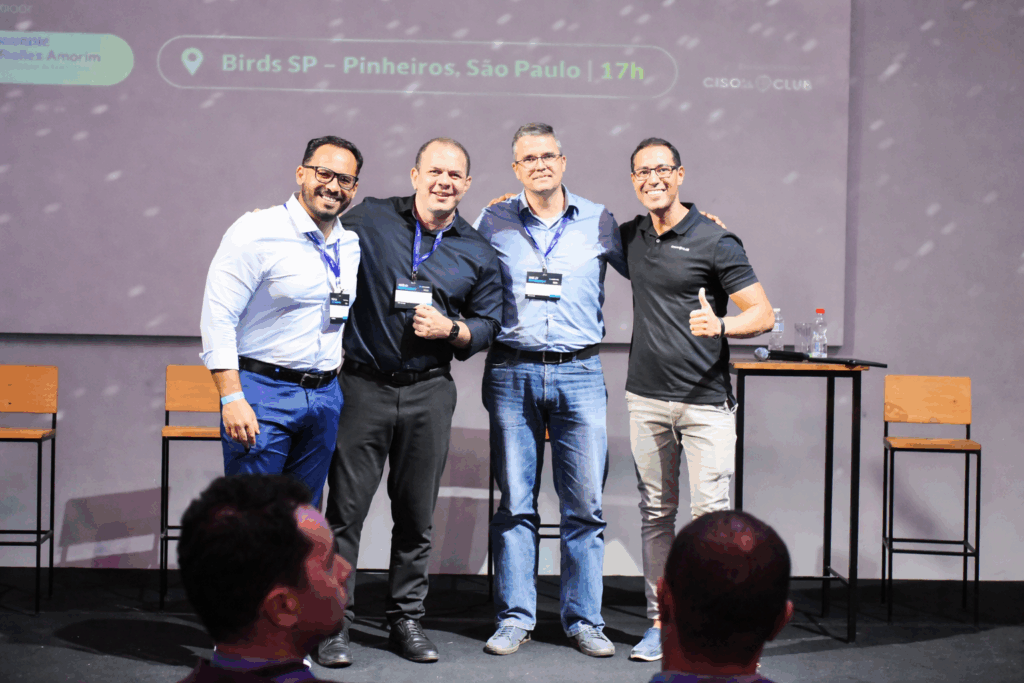
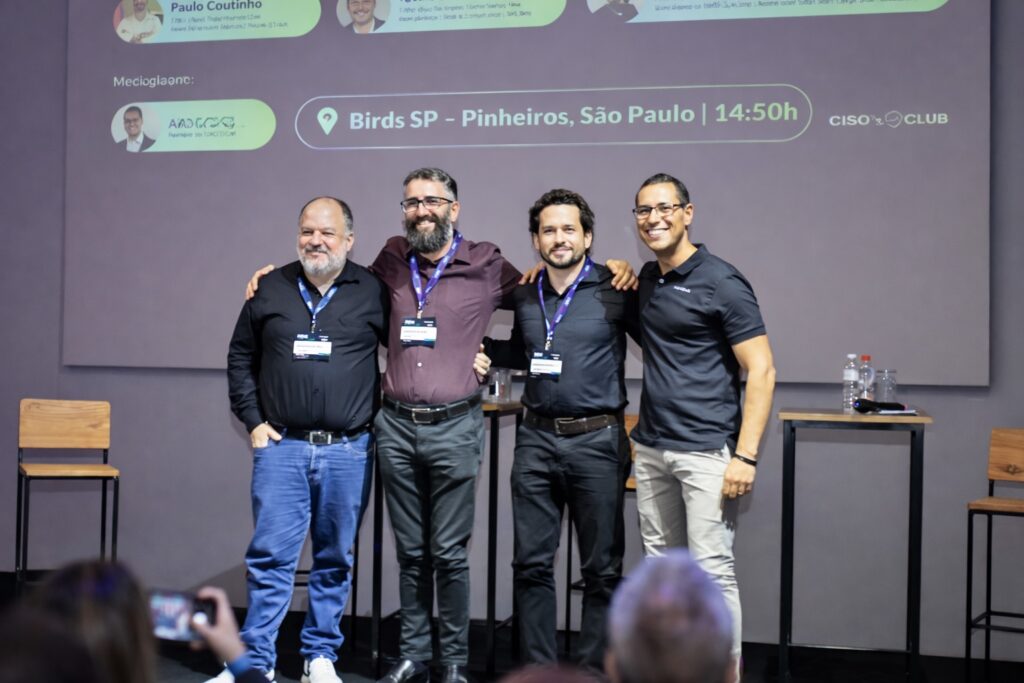
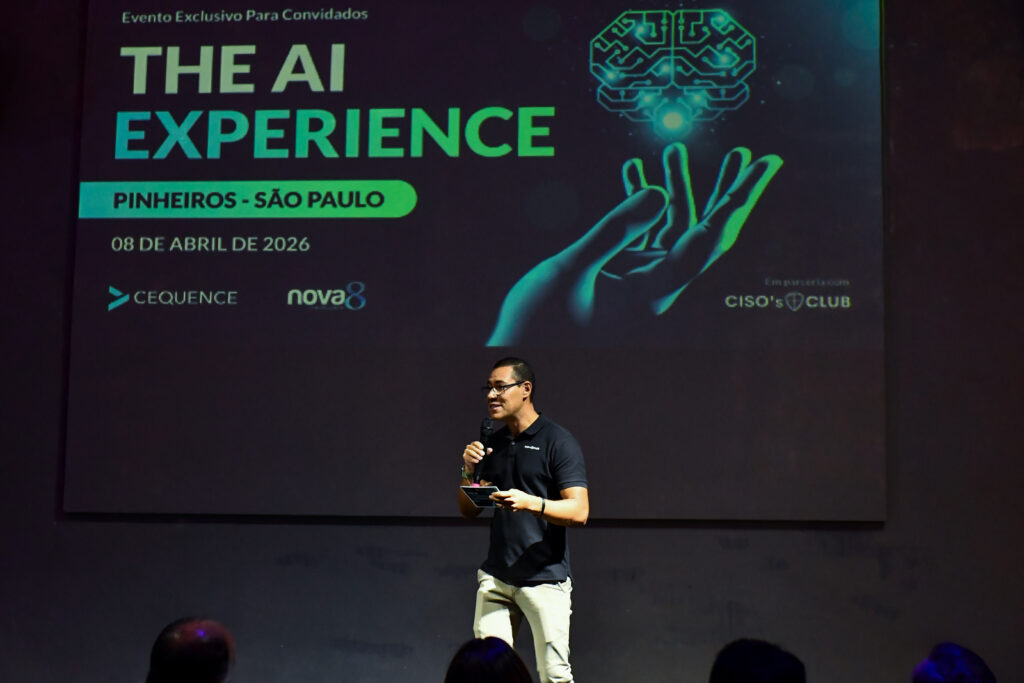
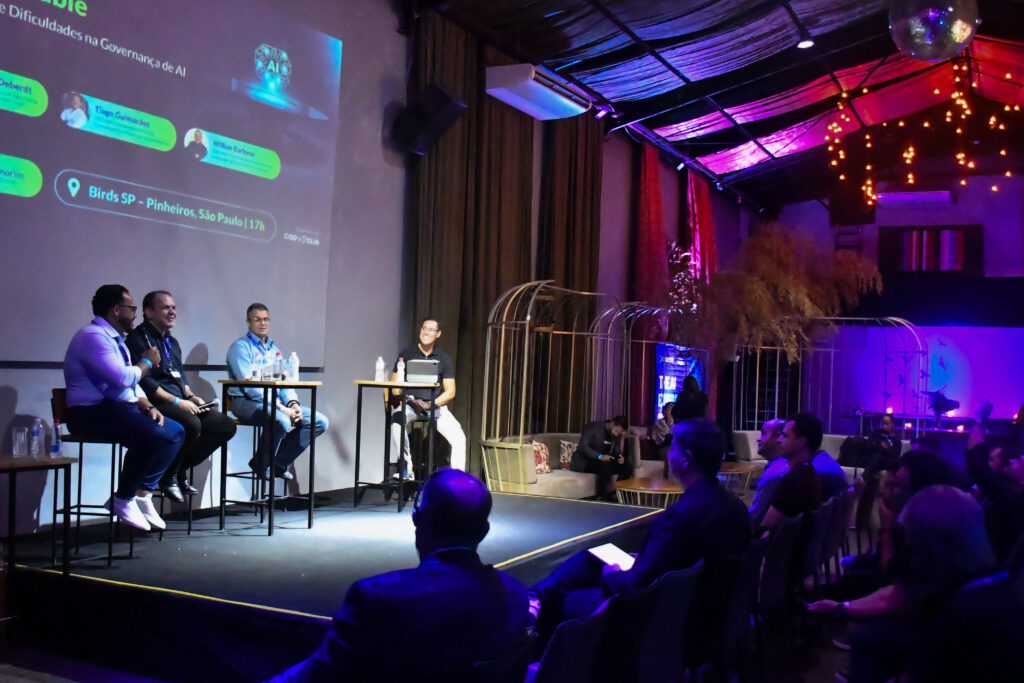
This was the central theme of the event promoted by Nova8 Cybersecurity, Cequence, and CISO’s Club, in an exclusive invitation-only gathering that brought together around 50 companies, with rotating attendance, presence of influencers, decision-makers, and C-Level leaders. Instead of a superficial approach, the event was designed to deepen a discussion that is already part of the routine of those who need to balance innovation, productivity, risk, and operational maturity.
Throughout the meeting, roundtables, success stories, testimonials, and technical discussions emphasized an important change in the market’s stance: the debate about AI is no longer just about potential. The focus now is on how to make AI work securely, with governance and real production capability.
What was the AI Experience
The AI Experience was a closed environment for exchange between executives and leaders who are already experiencing, in practice, two simultaneous movements.
The first is the increasing use of AI as a real business enabler, accelerating productivity, automation, and new ways of interacting with applications and data.
The second is the rising pressure for governance. As agents, models, and integrations multiply, more critical questions arise about identity, authorization, exposure, audit trails, misuse, and the control of connections supporting these initiatives.
This framework appeared consistently in the event transcripts. The discussions reinforced that the AI debate has moved from being conceptual to addressing extensive use, applied security, and strong governance for the corporate day-to-day.
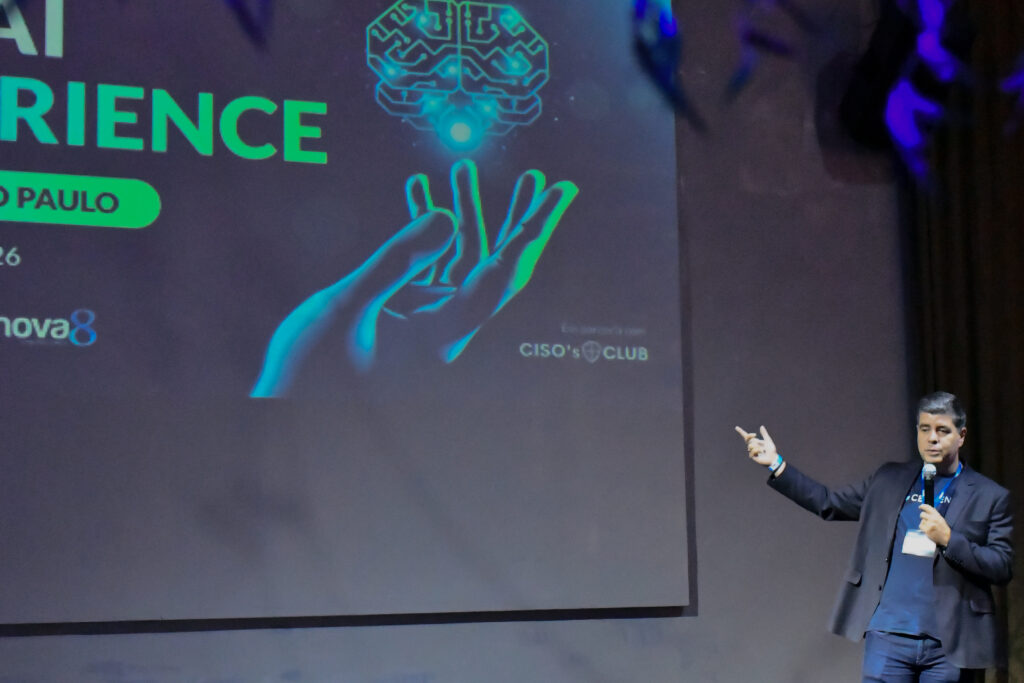
The main takeaway from the event: AI without governance becomes an operational risk
If there was a dominant message at the AI Experience, it was this: the company doesn’t need to choose between innovating with AI and maintaining control. But it needs to structure this adoption with the right criteria.
The speeches at the event show that the concern is no longer just with the AI model itself. The risk shifts to the context in which this AI operates: integrations with internal applications, API access, communication with corporate services, permission to perform actions, data circulation, and the potential for abuse.
In the main lecture, the discussion precisely advanced to this point. The presentation reinforced that the explosion of AI usage increases traffic, broadens the actions of agents on behalf of users, and demands more than just isolated identity. The central argument was that operating at scale now depends on visibility, behavioral understanding, granular authorization, and governance for agents to truly go into production.
In the Q&A session, the conversation became even more practical. Participants brought up questions about access control between corporate domains and AI tools, authorized connection paths, permission limitation, connector approval, MCP usage, and minimum privilege application. In other words, the debate shifted from theory to control architecture.
Why this topic matters for executive leadership
For executives, the topic is not only technological. It is a decision involving risk, continuity, and productivity.
When AI enters operations, it can accelerate processes, reduce friction, and enable new journeys. But it can also expand the attack surface, create unforeseen access paths, expose sensitive data, and result in misuse of corporate integrations.
Therefore, AI governance should not be treated as a late-stage or as a business brake. It needs to be understood as the mechanism that enables sustainable adoption.
This reasoning appeared strongly in the testimonials recorded at the event.
Testimonials about the event
The testimonials from Alain Derbert and Paulo Condutta help translate the event’s value to those experiencing this reality within companies.
Alain Derbert clearly summarized the urgency of the topic by highlighting that adoption is already underway and the challenge now is to structure security and governance at the same speed:
“We are extensively adopting AI… There’s no escaping it, we need strong governance and security.”
In the same testimony, he also emphasizes the value of the event’s format:
“It’s a super rich exchange of information.”
Meanwhile, Paulo Condutta brought up a decisive point for the executive interpretation of the event: security cannot be treated only as containment. It must enable the correct use of the technology.
“To delve deeper into this AI issue is very important.”
And he complements with a statement that sums up the spirit of the debate well:
“Security has to be an enabler, in a safe way.”
In the testimony, Paulo also draws attention to the importance of a specialized tool and well-controlled guardrails when users and systems begin to interact with AI in public and corporate environments.
These two testimonies help consolidate the value of AI Experience as a maturity meeting. The event served not only to reaffirm that AI matters but to show that more mature companies are already discussing how to control this evolution without losing business traction.
Where Cequence fits into this discussion
It is important to correctly separate the technological layer.
Cequence operates in API Security and Bot Defense. Its value lies in API discovery, inventory, traffic analysis, protection against abuse, bots, account takeover, fraud, and invisible risks in digital integrations. This is the correct positioning of the solution within the Nova8 Cybersecurity portfolio.
In the context discussed at the event, this becomes even more relevant because AI projects, especially in Agentic AI scenarios, start relying on APIs, connectors, corporate applications, and data flows to operate in production.
The complementary material from Cequence and Nova8 Cybersecurity reinforces this point by emphasizing that enterprise Agentic AI projects need to consider everything from rapid prototyping to authentication, authorization, monitoring, visibility, guardrails, safe use of MCP, deployment flexibility, and security as a foundation. The same material positions the AI Gateway from Cequence as a way to connect agents to corporate applications and SaaS with more control, authentication, authorization, and monitoring.
This point also appeared in the event’s lectures, particularly when the discussion advanced to the role of a central layer of visibility, governance, and control between agents, applications, and data.
The role of Nova8 Cybersecurity beyond technology
Another important aspect of AI Experience was showcasing the role of Nova8 Cybersecurity beyond the simple distribution of technology.
Cequence provides the technology. Nova8 Cybersecurity adds value as a value-added distributor, VAD, and Trusted Advisor in cybersecurity, connecting the manufacturer to the real market context with consultative support, training, implementation, demand generation, and operational follow-up. This is the correct institutional logic to position Nova8.
In the context of the event, this was evident in how the conversation was conducted: not just presenting a solution but translating the technology into practical decision criteria for leaders who need to evolve their AI strategy with greater maturity.
This is an important point for channels, partners, and end companies. In topics such as AI governance, API security, and agent adoption, the decision rarely depends solely on the tool. It depends on understanding the right layer, the correct design of the use case, and the ability to accelerate adoption without increasing operational noise.
What the event showed about the near future
The AI Experience also reinforced that the market is entering a more demanding phase of the AI journey.
The enthusiasm for automation and productivity remains high. But as companies move from pilot to production, the demand for coherent architecture, access control, usage policies, integration governance, and protection of newly exposed surfaces increases.
The main lecture transcripts show exactly this shift. The debate moves from the generic idea of AI to discussing autonomous agents, visibility over actions, granular authorization, central control repository, and scalable corporate use.
This is the type of transition that directly interests CISOs, CTOs, CIOs, architecture leaders, AppSec, DevSecOps, and digital operations. In the end, the question is not if AI will be used. The question is with what level of control it will be adopted.
The conversation continues: deepen the topic with the complete material
The AI Experience debate was reserved for a select group of guests. But the topic needs to gain practical extension for more leaders who are dealing with the same pressure.
For this reason, Nova8 Cybersecurity and Cequence gathered supplementary material with 10 essential considerations for enterprise Agentic AI projects, covering the points that matter most to transform experimentation into safe operation.
If your company is evaluating how to advance with AI without increasing risk, this is a useful next step for decision-making.
Conclusion
The AI Experience was relevant because it treated AI in the way it needs to be treated now: as a business, operational, and governance subject.
The meeting showed that the market already understands AI’s potential to accelerate productivity and innovation. What differentiates more mature organizations is the ability to structure this adoption with visibility, authorization, guardrails, and API security.
It also showed that this conversation needs to unite executive vision and technical depth. Because in corporate AI, governance is not a detail. It is what separates a promising experiment from a sustainable operation.
And it was precisely this quality of debate constructed by Nova8 Cybersecurity, Cequence, and the CISO’s Club.
FAQ
What was discussed at the AI Experience?
The event discussed how AI is already enabling businesses in practice and the concrete challenges of governing this adoption with safety, control, and maturity. The conversations covered productivity, agents, integrations, APIs, identity, guardrails, and operational governance.
Why has AI governance become a priority?
Because AI has moved beyond being just a test or trend and has started interacting with applications, APIs, and corporate data. This expands the risk surface and requires more consistent authorization, monitoring, visibility, and usage policies.
Where does Cequence fit into this scenario?
Cequence operates in the API Security and Bot Defense layer, helping companies discover, govern, and protect APIs, integrations, and digital flows against abuse, bots, fraud, and invisible risks. In the context of AI, this role becomes even more relevant.
How to continue this conversation?
The most practical way is to deepen the decision criteria with the material “Top 10 Considerations for Enterprise Projects of Agentic AI” and assess with Nova8 Cybersecurity how this theme applies to your scenario.
Material link:
https://materiais.nova8.com.br/top-10-consideracoes-para-projetos-enterprise-de-agentic-ai-nova8-cybersecurity